Last year, a friend of mine told me about the Arduino. He was using one with his model railroad. Hang on, I said, you don’t know anything about computers. “I don’t need to”, he replied. “It only took me a few weeks to learn how to use the Arduino.” My friend is a business executive. The Arduino went on my Christmas wish list (thanks Bob) and I have not looked back.
Author: John VE6EY
Does a Noise Canceller Really Work?
Yes, a noise canceller can work well. But success with a noise canceller really, really depends on how well you position the noise antenna, sometimes called a noise probe. Here’s what you need to know to set up your noise canceller and its noise probe. This is stuff I learned by experimenting and goes beyond what you find in the manual.
3D printer – What will you do with it?
This question just might signal a paradigm shift. It certainly has in the past. We humans learn by thinking and doing, usually together. What will you do with your 3D printer?
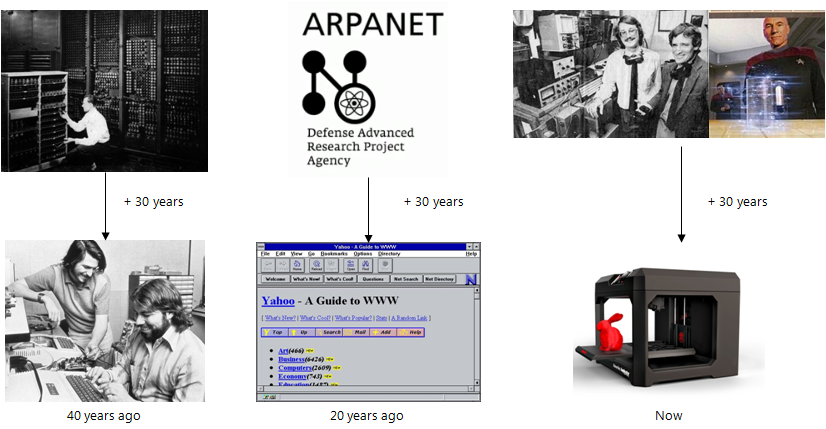
When I built my first computer forty years ago, the first question my friends asked was “what will you do with it?” When I got my first high-speed internet connection twenty years ago, the first question my friends asked was “what will you do with it?” When built my first 3D printer this year, the first question my friends asked was… you guessed it. (Sadly, the second question they ask now is “can you print a gun?”)
Another commonality is the time elapsed between the arrival of these technologies and when they went mainstream. The foundations of modern computers – ENIAC, Von Neumann architecture – were invented 30 years before the home computer went mainstream. The Internet’s foundations – packet switching, APRANET – were invented 30 years before the Internet went mainstream. The precursor of the 3D printer – Rapid Prototyping – came to the industrial market 30 years before the 3D printer went mainstream. Incidentally, that that was the same year the “replicator” appeared in Star Trek: The Next Generation.
Adventures with Radio Frequency Interference
People who enjoy listening to the High Frequency radio spectrum (3-30 Mhz) face an ever increasing problem of Radio Frequency Interference. Think of RFI as noise pollution to the radio spectrum. This video describes some RFI problems and details a series of diagnostic steps that can help identify noise sources.
YouTube Inspires and Teaches
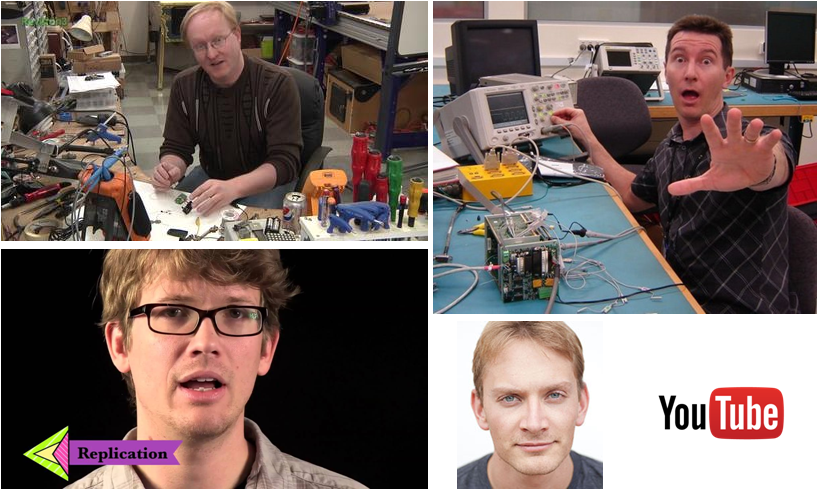
The single biggest cultural benefit of the Internet is the ability to find and devour meaningful content. Yes, we often have to wade through an ocean of crap before we find it. But it’s there. And a lot of it is on YouTube. While rekindling my interest in radio and maker hobbies, one question always seemed to lead to another. I have found many answers on YouTube. But more than answers, I found inspiration. The quality of some of these videos is very good. So here is a quick look at four of my favorites. I would love to hear about yours.
RTL-SDR: Does it really work?
When I put the RTL-SDR at the top of my Christmas wish list last year, a few eyebrows were raised. Why would a guy who has played with some of the best radios available want a little trinket that looked like a USB flash drive and cost about the same? Surely that was a mistake. It wasn’t.
According to Wikipedia, a dongle is “a small piece of hardware that attaches to a computer, TV, or other electronic device in order to enable additional functions…” The RTL-SDR is a dongle that plugs into the USB port and enables your computer to be a software defined radio. You just need to add software (which can be free) and an antenna and voila – a complete reasonably high performance radio for under $20.
Men and the Art of Lawnmower Maintenance
Did you ever read the instructions for your lawnmower? How often do you think it needs maintenance? Apparently, I thought that the answer was every ten years. Or, perhaps not.
Most of my life I have avoided diving too deeply into things mechanical, at least when it comes to household chores. Mowing the lawn is such a chore. When I bought my first house, I was given a hand-me-down push mower. It was very hard to push and did not cut very well. In hindsight, I think the previous owner had also followed the ten year maintenance rule of thumb. Since then, I have had a series of lawnmowers that each ran for 8-10 years with no maintenance.
No surprise, then, when my ten year old gas mower failed to start last week. My first thought was to buy a replacement. But it is still early in the summer and hard to find a good sale. Perhaps, I thought, I can fix this thing and at least use it for a few more months. I dug out the manual.
What is your fascination with radio?
Radio of all sorts has captured my interest since I was a child. It still does. I wonder why? Here is the story of my fascination with radio. What’s yours?
Remembering CJOB – The Main Studio
We were all young once. Here I am in the main radio broadcast studio at CJOB during the early 1970’s. When you look at your picture album, do you ever notice that while you look so young, everything around you in the photo looks so old? Young broadcasters might have difficulty identifying these historical artifacts. Today’s broadcast studios are mostly software and monitors. Back in the day, we had hardware, and lots of it!